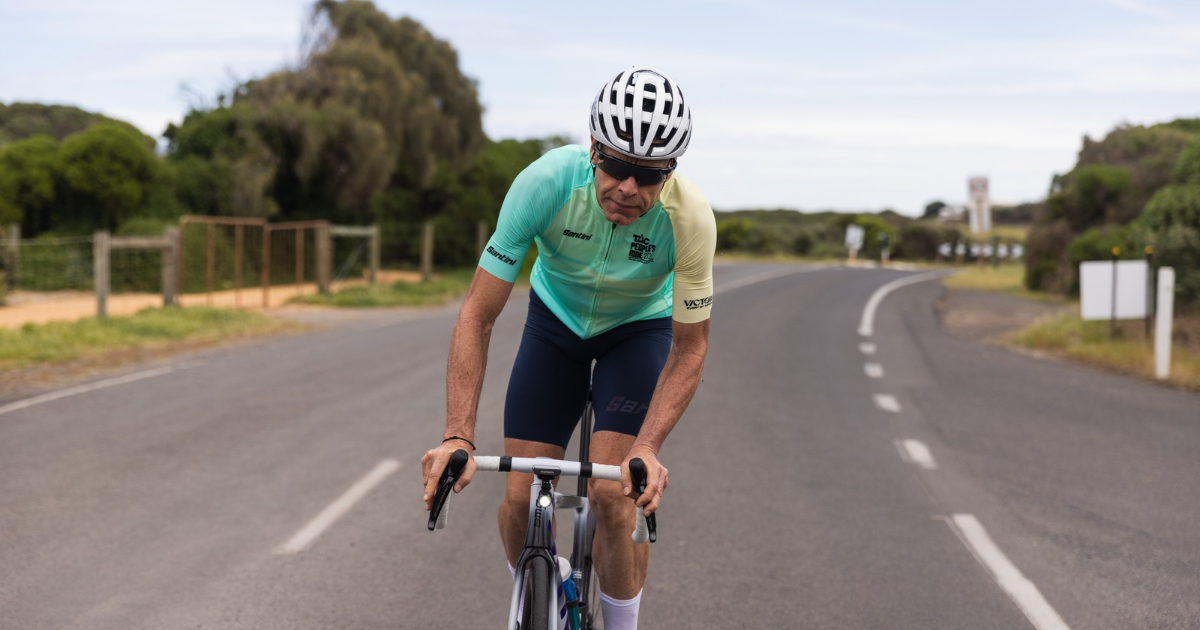
The TAC People’s Ride is your chance to ride the same roads the pros race on and finish on the Geelong Waterfront. It’s a big day out, and with the right preparation it’s one you’ll remember for all the right reasons.
To help you get there, Cadel Evans has put together Prep Like a Pro: a free 10-week training plan, with one version for the 114km ride and one for the 63km ride. The plans run from Monday 23 November 2026 through to race day on Saturday 30 January 2027.
To help grow the sport and encourage people to get on the bike this summer for the TAC People’s Ride, Brown has kindly detailed a training plan for the 2025 event.
How the plans work
Training Explained:
Each plan sets out what to ride every day, week by week. The first weeks build your base, the middle weeks add hills and longer rides, and the final week tapers off so you arrive fresh on the start line.
The long ride falls on a Saturday each week to match race day, and the plans work around Christmas Day and New Year’s Day. Every session is colour-coded, so you can see at a glance whether it’s a rest day, an easy spin or a harder tempo, threshold or climbing session.
The sessions are a guide, not a rulebook. Swap days around and add or take away time to fit your week. If you miss a session, don’t try to catch up. Just move on to the next one.
Which plan is right for you?
114km plan: for riders already comfortable on the bike for 2 hours or more. It builds from around 4 hours a week to 10 or more at its peak.
63km plan: for newer riders, or anyone comfortable riding for about an hour. It builds from around 3 hours a week to 6 or more at its peak.
Not sure? Start with the 63km plan. It’s a great ride in its own right, and there’s no better way to experience the course for the first time.
Starting a little later than 23 November? Pick up the plan at the current week and keep building from there.
Choose your distance and download your free plan. Print it, stick it on the fridge, and tick off each session as you go.
114KM
114km Training Plan
For riders comfortable on the bike for 2+ hours. 10 weeks, around 4 to 10+ hours a week.
63KM
63km Training Plan
For newer riders, or anyone comfortable riding for an hour. 10 weeks, around 3 to 6+ hours a week.
Key sessions:
- The long ride: This is not only for the legs but also for the head and the rest of the body. Whether you’re riding 114km or 63km at the TAC People’s Ride, it’s the time in the saddle, the hours of sun and wind in your face, and eating and drinking on the bike that you need to get used to. Use your long rides to practise your event-morning routine, your food and your kit.
- Climbing: The hardest climbs come on the way back into Geelong, when your legs are already tired. Do your tempo, threshold and VO2 efforts on a hill where you can, so you learn to pace a climb. Start each climb a little easier than you think you need to, stay seated where you can, and change down early.
- Easy days: You get fitter while you recover, not while you train. On easy days, ride at a pace where you could hold a full conversation, keep it short, and stay on flatter roads if you can. If you’re tired, a rest day is better than a hard session done badly.
- Riding in a group: There’ll be big groups on the road on event day, so get used to riding with others before then. Join a club or café ride, practise holding your line, and use the calls and signals below. Sitting in a group also saves energy, which you’ll want in the second half of the ride.
Rest or cross training: A day off the bike to let your body absorb the training. Cross training is exercise off the bike that complements cycling: gym, pilates, a walk, a swim or a run.
Easy and social: A short, relaxed ride, ideally with friends or a group. You should be able to hold a full conversation the whole way.
Endurance: A longer ride at a social pace. Time on the bike matters more than speed, so mix in a few hills.
Long ride: Your longest ride of the week, at endurance pace. Use it to practise eating and drinking on the bike.
Tempo: A pace you could hold for around an hour. About 70 to 80% of max heart rate.
Threshold: A hard pace you could hold for around 20 minutes. About 85 to 95% of max heart rate.
VO2: High intensity you can only hold for 5 to 7 minutes flat out.
Climbing efforts: Tempo, threshold or VO2 efforts done on a hill, to prepare for the climbs back into Geelong.
Openers and sprints: A short ride two days before the event with a few brief hard efforts to keep your legs sharp without tiring them. A sprint is a maximum effort, out of the saddle, everything through the pedals.
Cycling Tips:
Cadel’s #1 tip: Be consistent. Three or four rides a week, every week, will get you further than one big ride followed by a week off.
Nutrition and hydration:
- Staying fuelled and hydrated is the key. Like a car, it’s better to top up with fuel or a charge before you run out. Eating and drinking on the bike will make the ride easier and more enjoyable, and help you feel fresher for the rest of the weekend. Make the most of the rest stops!
- Before training, eat a carbohydrate snack such as toast or a banana so you never start on empty.
- On rides over 90 minutes, take food that’s easy to digest: bananas, bars, gels, lollies or a jam sandwich. Eat every 30 to 45 minutes, up to 60g of carbohydrate an hour on harder rides.
- Always carry a drink with carbohydrate and electrolytes. On hot days, drink more often and plan where you’ll refill your bottles.
- After training, have a meal with protein and carbohydrate, such as eggs on toast or chicken and rice.
- Practise your event-day food on your long rides, and don’t try anything new on the day.
Take on every ride:
- Helmet
- Sunglasses
- Pump or CO2, tyre levers, multi-tool and a spare tube
- Front and rear lights
- Phone, ID and a bank card
- Food and two full bottles
- Sunscreen, put on before you leave
Group riding:
- Ride smoothly and predictably, without sudden braking or swerving.
- Keep left unless you’re passing, and call “passing” or ring your bell as you go by.
- Don’t overlap your front wheel with the rear wheel of the rider ahead. If they move sideways, you’ll both go down.
- Signal before you turn or stop: point and call “left” or “right”, and put an arm up and call “stopping”.
- Point out potholes, glass and other hazards for the riders behind you.
- When you stand on the pedals, push a little harder on the first stroke so your bike doesn’t drop back into the rider behind.
Preparing your bike:
- Book a full service two to three weeks before the event, so there’s time to fix anything the mechanic finds.
- Clean the bike, degrease the chain and put fresh lube on.
- Check your brakes and replace worn pads.
- Check your tyres for wear and cuts, and pump them up the day before.
- Make sure your gears change cleanly, and charge electronic gears the night before.
- Don’t fit new parts or change your position in the last week.
Event day:
- Lay out your kit, food and bottles the night before.
- Eat a carbohydrate breakfast two to three hours before the start.
- Arrive early so you have time to park, sort your bike and use the toilet.
- Start steadily. With a big group around you, it’s easy to go too hard in the first hour.
- Eat and drink early, before you feel hungry or thirsty.
- Pace the climbs back into Geelong and save something for the finish.
- Look around and enjoy it. You’re riding the same roads as the pros.
Road Safety for Cycling:
Be safe, be seen and ride smart: safe cycling tips from the TAC.
- Know the road rules: Learn the road rules for cyclists and follow them on every ride. Make sure the people you ride with know and follow them too.
- Plan your route: Plan your route before you head out, and choose the brightest, safest roads, even if it adds a few kilometres. Stay alert and avoid distractions.
- Be seen: Use front and rear lights, day and night, and wear bright or reflective clothing so drivers can spot you early.
- Look after your bike: Service your bike regularly, yourself or at your local bike shop. Keep it clean, especially the chain and brakes, so it stops and shifts when you need it to.